
Alabaster is one of the few architectural materials capable of actively working with light. It does not simply reflect or block it. It absorbs, filters and returns it transformed.
This quality places translucent alabaster stone in a singular position within contemporary architecture, particularly in projects where light functions as a constructive element.
Understanding how light behaves in alabaster is not a theoretical matter. It is a technical requirement for specifying the material accurately and achieving the intended results on site.
Alabaster as a Natural Translucent Stone
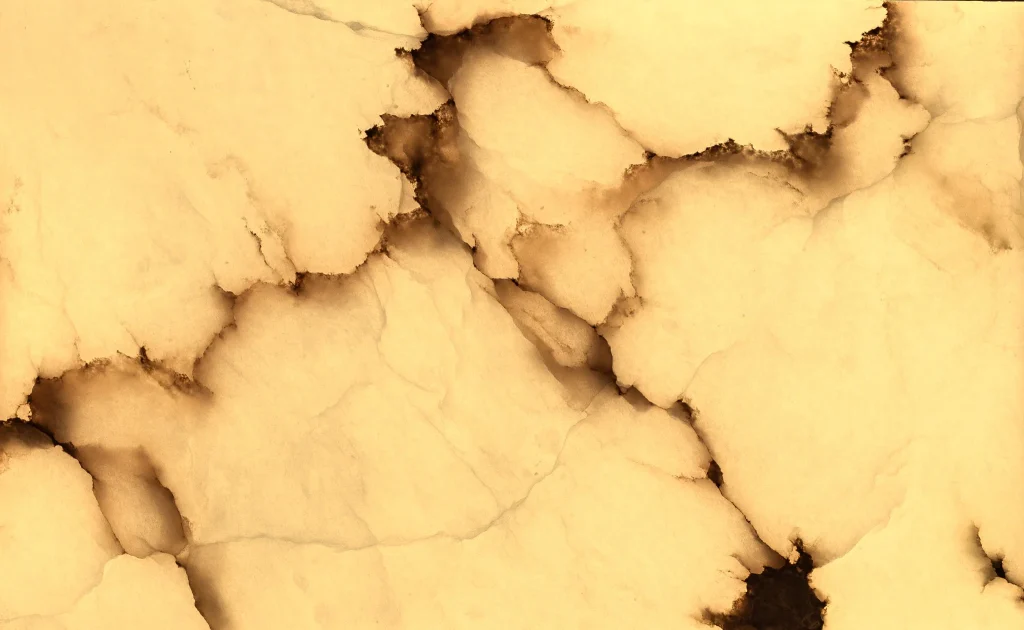
Unlike industrial translucent materials, alabaster is a natural stone with a unique internal structure. Its mineral composition, along with the distribution of veining, clouds and internal formations, generates a rich and complex light diffusion.
When illuminated, whether by natural or artificial light, alabaster surfaces gain depth, nuance and visual movement.
This is what differentiates architectural alabaster from glass or synthetic diffusers.
What Happens When Light Passes Through Alabaster
When a light source reaches an alabaster panel, several phenomena occur simultaneously:
- Internal diffusion: light disperses within the stone, softening its intensity.
- Chromatic filtering: alabaster subtly modifies perceived colour temperature.
- Vein definition: denser areas absorb more light, creating internal depth.
The result is not a merely illuminated surface, but a luminous mass with variation and tonal gradation.
In backlit alabaster panels, this behaviour becomes especially evident.
Factors That Influence the Luminous Behaviour of Alabaster
Material Thickness
Thickness is one of the most determining factors in alabaster light diffusion.
- Thinner panels allow greater light transmission but reduced visual depth.
- Thicker panels decrease light intensity while increasing internal richness.
Thickness selection must always respond to the desired spatial effect and functional requirements of the space.
Veining Type and Orientation
Veining directly affects how light is distributed within translucent alabaster stone.
More pronounced veining creates internal contrasts, while softer patterns offer a more uniform reading.
Selecting the appropriate veining is not purely an aesthetic decision. It is a luminous decision.
Type of Light Source
Not all lighting systems interact with alabaster in the same way.
- Continuous LED systems produce more uniform surfaces.
- Point light sources tend to generate internal shadows and unwanted contrast.
In addition, light quality, including CRI and chromatic stability, directly influences the final perception of the stone.
Distance Between Light Source and Stone
The technical cavity between the light source and the alabaster panel allows proper light dispersion.
Insufficient distance often produces a flat reading and reduces depth perception in backlit alabaster walls.
Correct cavity dimensioning is essential for achieving volumetric light behaviour.
Alabaster and Natural Light in Architecture
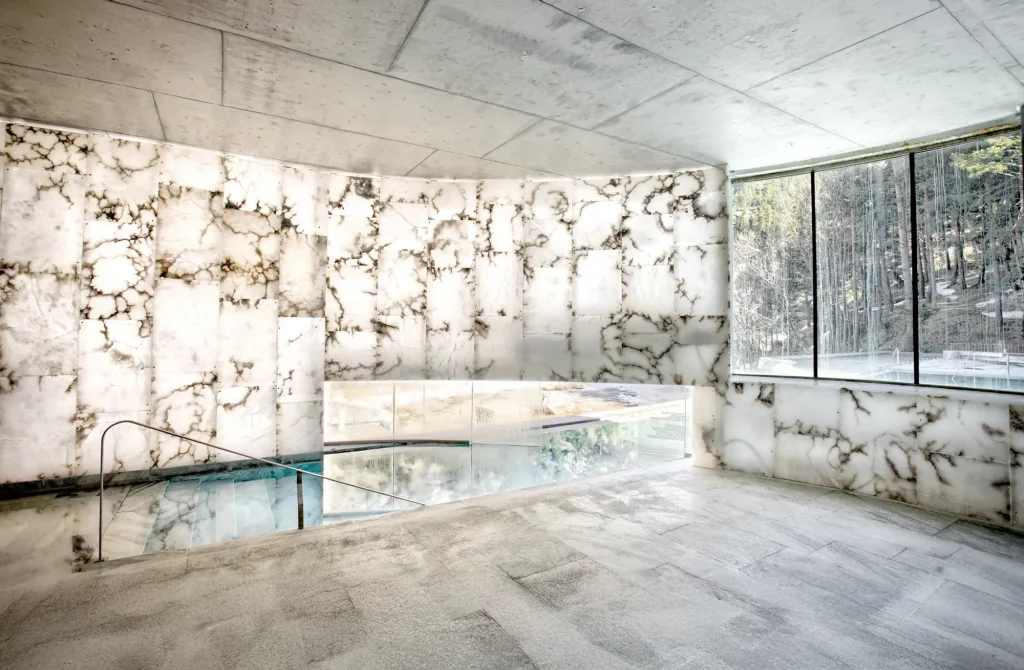
Alabaster also responds exceptionally well to natural light.
In skylights, façades or filtering elements, it acts as a luminous regulator, reducing glare and softening daylight penetration.
This behaviour makes alabaster particularly suitable for:
- Institutional buildings
- Cultural architecture
- Projects requiring controlled natural illumination
In such contexts, alabaster becomes not only a material, but a mediator between exterior light and interior atmosphere.
Common Misinterpretations of Alabaster Light Behaviour
One frequent mistake is treating alabaster as if it were glass or an industrial diffuser. This approach ignores its nature as a natural stone and often leads to incorrect technical decisions.
Another common oversight is failing to conduct tests with the actual material. Generic simulations rarely reflect the complexity of alabaster’s internal structure.
Understanding how light behaves in alabaster requires direct material engagement.
The Value of Specialised Technical Guidance
Successful specification of architectural alabaster depends on practical experience.
Only through direct work with thickness, veining and lighting systems can the material’s luminous performance be accurately anticipated.
Specialised companies such as Arastone Alabaster, with quarry control and technical expertise in translucent stone, make it possible to anticipate luminous behaviour from the earliest design phases. This avoids technical inconsistencies and optimises the final architectural result.
Light as Architectural Matter
In architecture, light is not an accessory. It is matter.
When working with alabaster, this statement becomes literal.
Understanding how light behaves in alabaster allows architects to design with greater precision, coherence and sensitivity. It is in this interaction between stone and light that alabaster reveals its full architectural potential.