

One of the defining qualities of unique alabaster stone is its singularity. Unlike industrial materials, where uniformity is expected, natural alabaster is valued precisely because no two pieces are ever identical.
Each alabaster slab, block or panel carries its own geological identity. This condition is not incidental. It is the very reason why unique alabaster stone is sought after in architecture, interior design and sculpture.
Understanding why alabaster is inherently unique allows architects and designers to specify the material with clarity and to fully embrace its expressive potential.
A Geological Origin That Makes Alabaster Unique
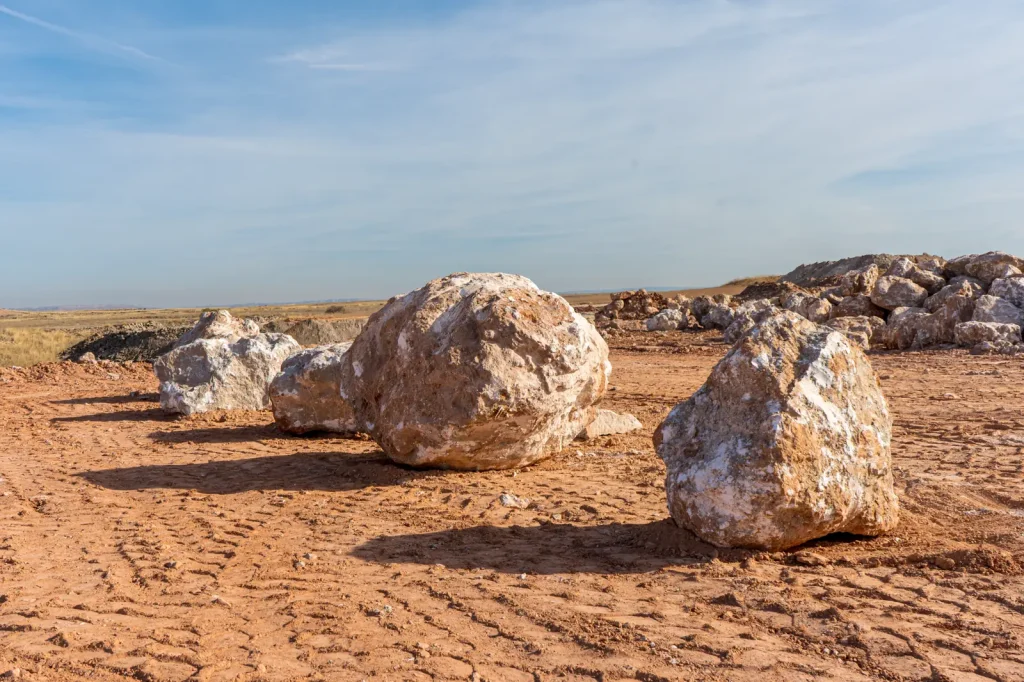
Alabaster forms over millions of years through complex geological processes. During this time, variations in:
- Pressure
- Temperature
- Mineral concentration
- Water movement
Create an internal structure that can never be replicated.
This is what makes alabaster a truly unique natural stone. Its internal veining, cloud-like formations and density shifts are the result of natural forces acting over time.
No artificial process can reproduce this complexity.
Why No Two Alabaster Slabs Are the Same
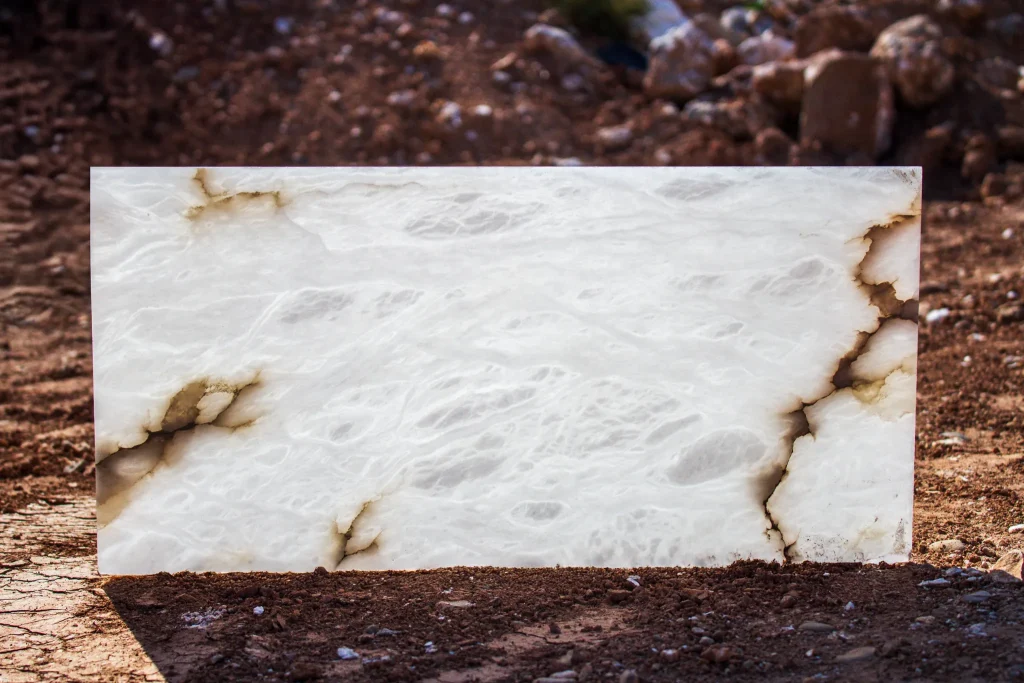
Even within a single block, alabaster displays internal variation. Veining direction, translucency levels and tonal nuances shift subtly from one cut to the next.
As a result, even consecutive slabs extracted from the same block will differ in visual character.
This inherent variability is what defines unique alabaster slabs and makes them particularly valued in high-end architectural projects.
Rather than repetition, alabaster offers rhythm, movement and depth.
Unique Alabaster Stone and Light Interaction
The uniqueness of alabaster becomes even more evident when light interacts with it.
As a translucent stone, alabaster responds differently depending on its internal structure. Two pieces of identical thickness, illuminated in the same way, can:
- Transmit different light intensities
- Emphasise different veining patterns
- Create distinct spatial atmospheres
In this sense, unique alabaster stone is not only visually singular, but behaviourally singular.
Light reveals what is inside the material.
Natural Variation as Architectural Value
In contemporary architecture, where many materials are standardised, the natural variation of alabaster is increasingly appreciated.
Specifying unique alabaster stone means accepting that every surface will carry subtle differences. This does not imply a lack of control. It implies a refined form of control based on:
- Careful slab selection
- Thoughtful composition
- Understanding of material behaviour
The result is architecture with identity rather than repetition.
Managing the Uniqueness of Alabaster
Because alabaster is a one-of-a-kind natural stone, its specification requires a specific approach:
- Pre-selection of slabs
- Coherent grouping of pieces
- Technical guidance during installation
Specialised companies such as Arastone Alabaster, with direct control from quarry to finished slab, make it possible to manage the natural uniqueness of alabaster with precision.
This ensures aesthetic coherence without compromising authenticity.
Unique Pieces, Irreplaceable Spaces
The fact that no two pieces of alabaster are identical is not a limitation. It is its greatest strength.
Every project incorporating unique alabaster stone becomes inherently unrepeatable. Each space carries its own material identity.
In architecture and design, alabaster does not offer uniformity. It offers character, depth and authenticity.
In an increasingly homogeneous world, that singularity is precisely its enduring value.