
FAQ for Architects & Interior Designers
Alabaster is increasingly present in contemporary architecture and interior design projects. Its unique condition as a translucent natural stone introduces specific technical considerations that often raise questions during the design, specification, and construction phases.
This guide brings together the most frequently asked questions by architects and interior designers working with alabaster, offering clear, technically grounded answers to support informed decision-making.
Is alabaster a structural material?
No. Alabaster is not used as a load-bearing structural material.
In architectural applications, alabaster functions as a cladding material, light-filtering element, or backlit surface, integrated into construction systems that carry structural loads. Its value lies in its interaction with light and its material expression, rather than in structural performance.
Can alabaster be used in public spaces?
Yes—when properly specified.
Alabaster is successfully used in institutional, cultural, corporate, and high-traffic public environments, provided that key technical aspects are carefully defined:
- Appropriate thickness
- Fixing and support systems
- Expected usage conditions
- Maintenance strategy
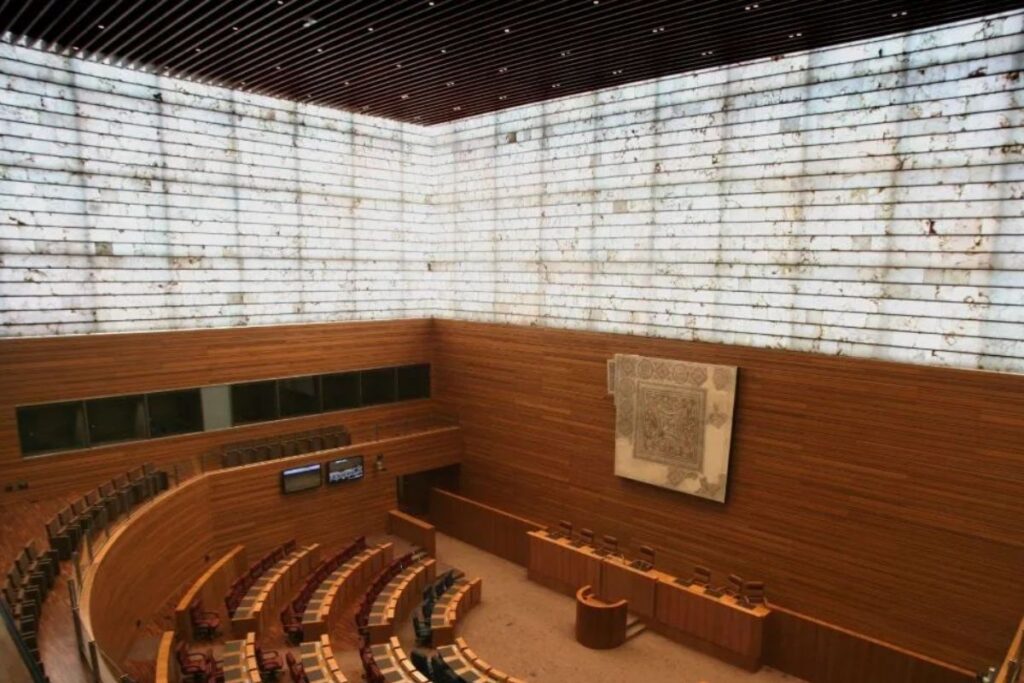
The success of alabaster in public applications depends not on the material itself, but on the technical criteria applied during design and execution.
Is alabaster a fragile material?
Alabaster is a relatively soft natural stone compared to others, but it should not be considered inherently fragile.
Its performance is fully compatible with architectural applications when:
- The correct thickness is specified
- Proper construction systems are used
- Inappropriate uses are avoided
Perceived fragility is typically the result of improper specification or lack of technical expertise.
What maintenance does alabaster require?
Alabaster is a low-maintenance material.
Recommended care includes:
- Cleaning with neutral (pH-balanced) products
- Avoiding abrasive or acidic agents
- Following standard practices used for natural stone
Under normal conditions, alabaster maintains its appearance and translucency for decades, preserving its aesthetic and material integrity.
Can any alabaster piece be backlit?
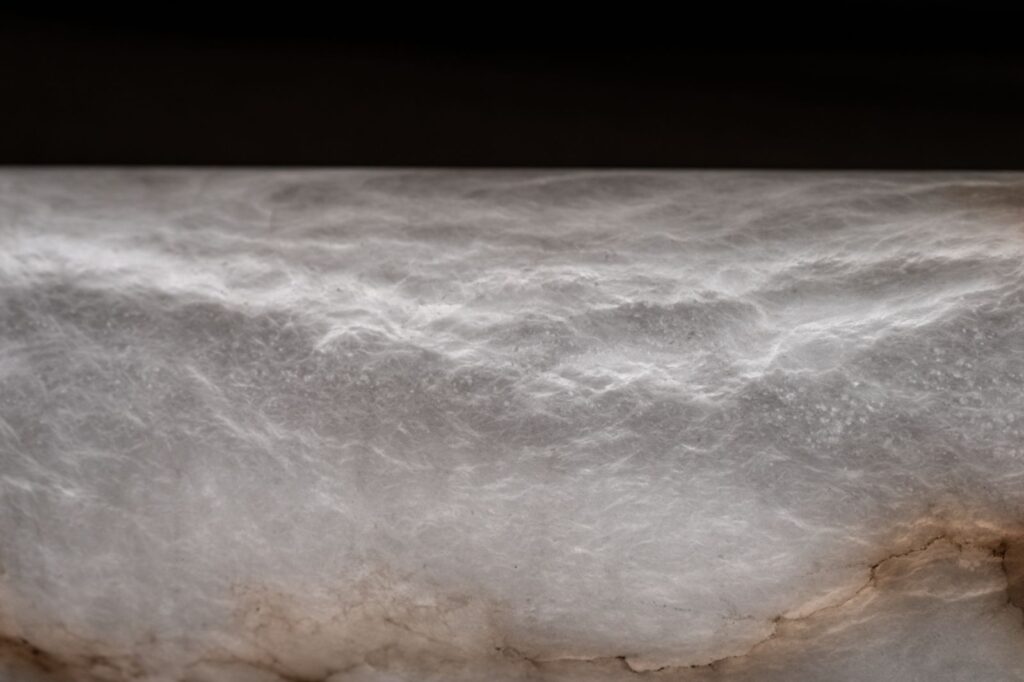
No. Each alabaster piece responds differently to light.
The final result depends on:
- Veining pattern
- Thickness
- Internal density
For this reason, it is essential to:
- Carefully select the material
- Define the lighting system precisely
- Conduct prior testing when required
Backlit alabaster is not a standard solution—it requires project-specific development.
What is the best color temperature for alabaster lighting?
In most cases, warm color temperatures (2700K–3000K) deliver the best results.
They enhance the natural veining and create depth, producing a soft, atmospheric glow. Neutral tones may work in controlled contexts, while cooler temperatures tend to distort the perception of the material.
The choice should always respond to the architectural concept and spatial intent.
Can alabaster be used with natural light?
Yes. Alabaster performs exceptionally well with natural light.
It acts as a light-diffusing filter, commonly used in:
- Skylights
- Interior partitions
- Translucent enclosures
In these applications, alabaster reduces glare and softens incoming light, improving visual comfort and spatial quality.
How can visual consistency be ensured across large surfaces?
Consistency is achieved through:
- Careful pre-selection of veining
- Strategic grouping and layout of panels
- Control over material origin
Working with specialists who manage the material from the quarry ensures that natural variability is controlled without losing visual coherence.
Is alabaster compatible with other materials?
Yes. Alabaster integrates naturally with a wide range of materials, including:
- Concrete
- Wood
- Steel
- Glass
Its translucency and organic character bring balance to contemporary compositions, adding depth without competing with other elements.
When should alabaster be specified in a project?
Alabaster should be specified from the early design stages, when the relationship between light, space, and materiality is defined.
It is not a material suited to last-minute substitution. Early specification allows:
- Optimized design integration
- Technical feasibility
- Coherent final results
Why is it important to work with an alabaster specialist?
Because alabaster is not a generic stone.
Its correct application requires technical expertise, material knowledge, and precise control from extraction to installation.
Specialized companies such as Arastone provide:
- Design-phase consultancy
- Material selection
- Technical support throughout the project
This reduces risks and ensures a high-quality architectural outcome.
A unique material requires precise answers
Alabaster offers exceptional architectural potential, combining light, materiality, and atmosphere in a singular way. At the same time, it requires a clear understanding of its properties and applications.
Addressing these questions early in the design process allows architects and interior designers to work with greater confidence, precision, and creative freedom.
This series aims to provide exactly that: clarity, technical rigor, and knowledge for professionals who understand material as an essential part of architecture.