
In alabaster sculpture, veining is not a secondary feature or a condition to conceal. It is an essential part of the artwork’s language.
Understanding how alabaster veining influences the sculptural result allows the artist to make more informed decisions, to fully engage with the material’s qualities, and to establish a genuine dialogue between form, light and matter.
Unlike more homogeneous stones, alabaster presents an internal richness expressed through veining, texture and subtle variations in density. These characteristics affect not only the visual outcome, but also the carving process and the way light interacts with the finished piece.
What Is Veining in Alabaster?
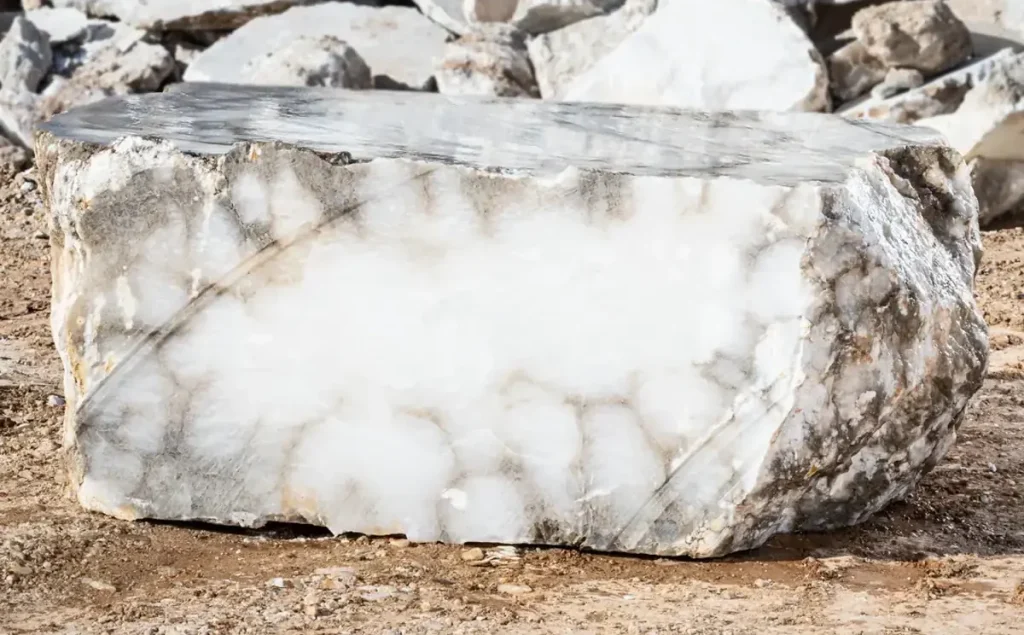
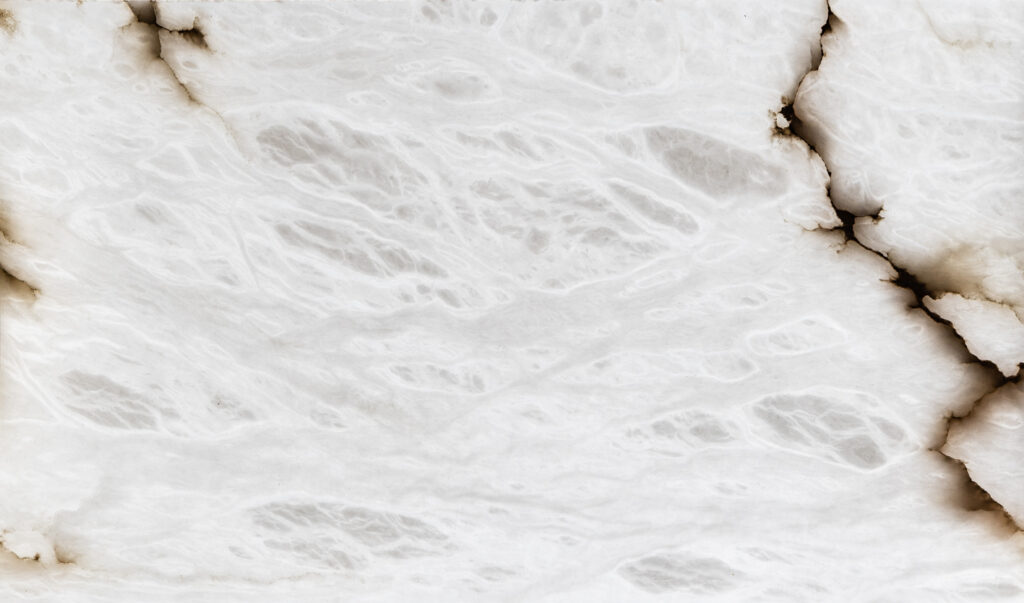
Alabaster veining is the result of its geological formation over millions of years. It appears in the form of:
- Soft or pronounced flowing patterns
- Internal cloud-like formations
- Variations in translucency
- Subtle chromatic shifts
Each alabaster block contains a unique combination of these elements, making every piece of alabaster inherently unrepeatable.
This natural variability is what distinguishes alabaster sculpture from work in more uniform stone.
Veining as a Guide in the Carving Process
In sculptural practice, veining is not ignored. It is observed and understood.
Many sculptors study the alabaster block carefully before carving, analysing the direction and intensity of the veining to determine:
- The orientation of the sculpture
- The direction of cuts
- Areas of greater or lesser volume
- Sections intended for higher translucency
This preliminary analysis allows the form to emerge in coherence with the material, rather than being imposed upon it.
Working with alabaster means working with its internal structure.
How Veining Affects the Perception of Form
In alabaster sculpture, form is not defined solely by contour. It is also shaped by what happens inside the stone when light passes through it.
Veining can:
- Accentuate depth
- Soften transitions between planes
- Introduce visual rhythm
- Create areas of greater optical density
Two sculptures with similar geometry can convey entirely different sensations depending on the alabaster veining within the block used.
In translucent stone sculpture, internal structure becomes part of the visual composition.
Veining and Light: An Inseparable Relationship
The luminous behaviour of alabaster is directly linked to its veining.
Denser areas absorb more light, while clearer zones allow greater translucency. In sculptural work, this results in:
- Subtle variations in light intensity
- Different readings depending on illumination
- Works that evolve throughout the day
Light does not merely reveal the external form. It reveals the internal structure of the stone. This is one of the defining qualities of carving alabaster compared to other sculptural materials.
Technical Decisions Influenced by Veining
From a practical perspective, veining also affects the technical aspects of carving alabaster:
- Structural resistance in specific directions
- Behaviour during roughing out
- Feasibility of achieving very thin sections
- Potential fracture zones
Understanding these variables allows the sculptor to work with greater precision and security, avoiding unnecessary breakage and respecting the integrity of the block.
Alabaster is a fine-grained stone of relatively low hardness, but its internal structure requires awareness and sensitivity.
The Importance of Selecting the Right Alabaster Block
Choosing the right alabaster block is a decisive moment in the sculptural process.
Not every block suits every sculpture. The veining must align with the artistic intention and the nature of the piece being created.
Working with specialised suppliers such as Arastone Alabaster, who understand the material from its origin and can advise on block selection, simplifies this process and increases the likelihood of a successful sculptural outcome.
Careful block selection is the foundation of strong alabaster sculpture.
Veining as Part of the Artistic Discourse
Alabaster veining is a trace of time. A geological memory that the sculptor incorporates into the artwork.
Each vein contributes character, depth and singularity.
In sculpture, alabaster is not a neutral support. It is an active material that participates in the creative process.
Understanding how veining influences the sculptural result means recognising that the final work emerges not only from the artist’s hand, but also from the history embedded in the stone.